Not sure where to start? The ninety-minute assessment is free, involves nothing to sign, and ends with a written twelve-week programme you keep whether or not you join. Call 000-000-0000
Most people who hire a personal trainer have already tried to do it themselves, and the thing that failed was almost never effort. It was the programme: five days a week when three were sustainable, the same four exercises for two years, no planned easier weeks, and no record of what was actually lifted. Effort without structure produces a lot of soreness and very little strength.
So we start with a ninety-minute assessment that costs nothing and commits you to nothing. We screen how you move, take a handful of baseline numbers we can cheaply repeat, and ask what your week honestly looks like. You leave with a written twelve-week programme whether or not you ever come back — a document, in plain language, with the reason for each block explained.
Our coaches are salaried employees with a fixed session load. Nobody here earns more by selling you more sessions, which is why a coach will tell you to drop to two days a week during a bad month, and why the same coach is still working with a member in year four. It is a boring commercial decision that changes almost everything about how the coaching feels.

What a private session actually contains
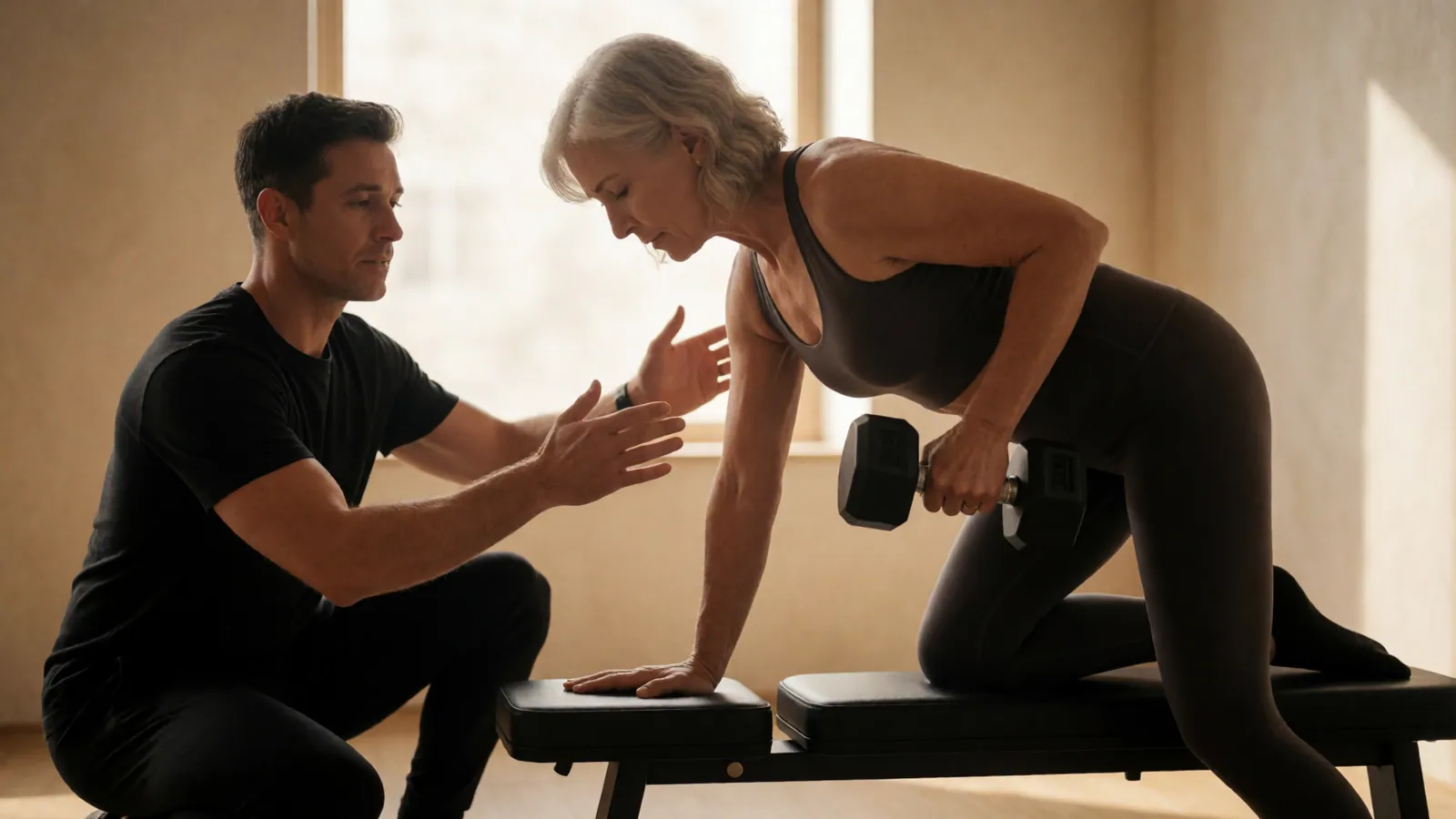
Sixty minutes, one coach, one person. Every session is logged and every log is visible to you.
A specific warm-up, not five minutes on a bike
Built around what you are about to do and what your screen said was restricted. This is where most of the mobility work quietly happens, rather than as a separate thing you would skip.
Two or three main lifts, coached in real time
The bulk of the hour. Load, sets, reps and how hard it felt, recorded as you go. Technique corrected between sets rather than narrated over them.
Accessory work chosen for your weak point
The unglamorous half. Upper back for a stalled bench, single-leg work for an asymmetry, grip for anybody over sixty. Nobody's accessory list here is the same as anybody else's.
Conditioning, if it belongs in the session
Sometimes it does and sometimes it competes with the lifting. Which one is true for you depends on your goal, your recovery and the other four days of your week.
Two minutes at the end, written down
What went up, what hurt, what to do between now and the next session. Emailed to you the same day and kept on your record permanently.
How we decide what you should actually be doing
The programme is a set of decisions, not a template with your name at the top. These are the decisions.
How many days a week you will really train
The honest number, including bad weeks. A three-day programme completed beats a five-day programme abandoned by an enormous margin, and this single answer changes the entire structure of the plan.
What the screen found
Restrictions get designed around rather than pushed through. If your hips will not extend, we do not simply load a squat harder — we fix the extension and the squat improves on its own.
What you actually want, stated as something measurable
'Get in shape' is not a goal, it is a mood. A first pull-up, a bodyweight deadlift, running a 5K without walking, or carrying two bags of shopping up four flights — those are goals, and they generate different programmes.
What has failed for you before
Somebody who has quit three gyms is telling us something useful about programme design. Usually the answer is that every previous plan was too much, too soon, and too dependent on motivation surviving February.
What your life will do to the plan
Night shifts, a newborn, travel, a job with unpredictable hours. We write the reduced-volume fallback version at the same time as the main plan, so it already exists on the day you need it.
Who our private coaching suits best
Private coaching is the most expensive thing we sell and it is not right for everybody. Here is where it genuinely earns its price.
Complete beginners in their first three months
The period where technique is set and habits are formed, and where doing it wrong costs the most time later. Many members take private sessions for twelve weeks and then move to small-group coaching permanently.
Anyone training around a real constraint
A repaired shoulder, a replaced hip, a spinal condition, a pregnancy, a chronic illness. This is coaching that needs eyes on every rep, and it is not something a class can deliver.
Experienced lifters who have genuinely stalled
Eighteen months at the same numbers is a programming problem or a technique problem, and both are difficult to diagnose from the inside. An outside pair of eyes usually finds it in one session.
People with a specific deadline
A wedding, a season, a physical test for a job, a competition. Deadlines change how a programme is periodised, and a fixed date is one of the few things that makes aggressive programming sensible.
Anybody who simply will not do it alone
This is a completely respectable reason and we would rather you named it than pretended otherwise. Accountability is a legitimate thing to buy, and for some people it is the only thing that has ever worked.
Personal Training in western Queens
One coach, one written programme, and somebody whose job it is to notice whether it is working.
It starts the same way whatever you are here for: ninety minutes with a coach, a movement screen, a handful of baseline numbers, and a written twelve-week programme in your hand at the end of it. The assessment is free, the programme is yours to keep, and there is nothing to sign.
Questions
Personal Training — the questions we are asked most
How much does a personal trainer cost in Woodside, NY?
A single sixty-minute private session is $95, a block of ten is $850, and the One-to-One membership at $549 a month includes eight private sessions plus full membership and unlimited classes — roughly $69 a session with everything else thrown in. Semi-private sessions for two people are $60 each. There is no package you are obliged to buy and no contract.
Do I have to buy a package of sessions?
No. You can book one session at a time indefinitely, and blocks of five or ten exist only because they are cheaper, not because they lock you in. Blocks never expire. Our coaches are salaried and earn nothing extra from selling you more, which is the whole reason we can offer it this way.
What happens in the free assessment?
Ninety minutes with a coach: a conversation about what you want and what you have tried, a movement screen covering squat, hinge, push, pull, carry and balance, and a set of baseline measurements — resting heart rate, blood pressure, grip strength, a chair-stand test and body composition if you want it. You leave with a written twelve-week programme, and there is nothing to sign.
Are your trainers actually certified?
Every coach holds a nationally accredited personal training or strength and conditioning certification and is current on CPR and AED. Priya is a licensed physical therapist and Elena is a registered dietitian, both clinical credentials rather than weekend courses. Certifications and expiry dates are on the wall by the desk and available on request.
How often should I train with a coach?
Most people do best on one or two private sessions a week alongside their own training, and plenty of members use private coaching for a twelve-week block and then move to small-group. Four sessions a week is rarely necessary and is usually a sign that somebody is buying supervision rather than coaching.
Can I train with a friend?
Yes — semi-private is $60 per person for two people with one coach, which is the best value coaching we offer. It works well when both people have broadly similar goals and experience. If one of you is a beginner and the other has trained for a decade, small-group or separate sessions will serve you both better.
What if I need to cancel a session?
Cancel more than twenty-four hours ahead and the session goes back into your block at no charge. Inside twenty-four hours it is charged, because your coach has held the hour and cannot fill it. Genuine emergencies are treated as genuine emergencies — talk to us.
Will you make me do things I hate?
Sometimes, when they are the things you most need — almost nobody enjoys their first six weeks of single-leg work. But an exercise you dread is an exercise you will avoid, so we will usually find a variation that trains the same quality. Tell your coach what you hate; it is programming information, not complaining.
Related
Members usually pair this with

Coaching
Small-Group Training
Six people, one coach, one programme — the coaching of a private session at a fraction of the price.
Read more
Coaching
Online Coaching
A written programme, video form review and a real coach — for people who train somewhere else, or everywhere.
Read more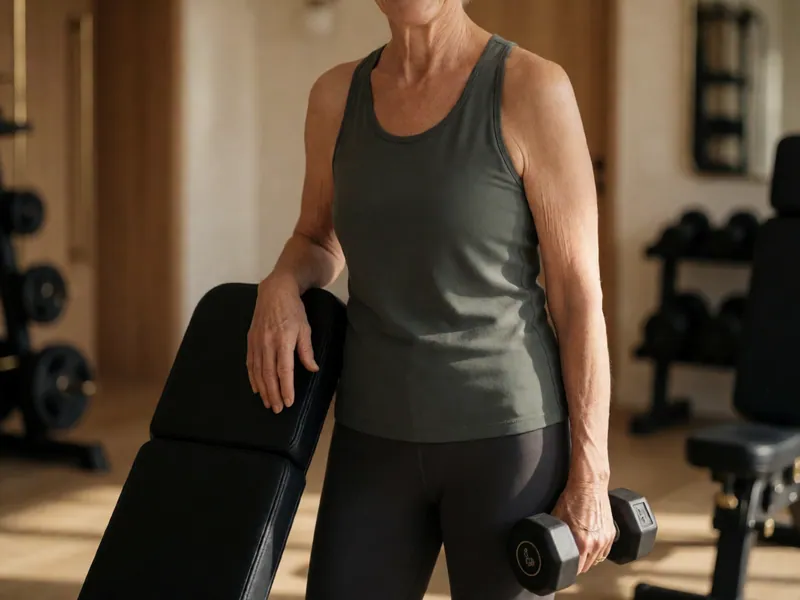
Coaching
Senior Fitness
Strength training for adults over sixty, aimed squarely at staying independent rather than at looking busy.
Read moreFree assessment, free trial week, no contract
Book a free 90-minute assessment
Ninety minutes with a coach, nothing to sign, and a written twelve-week programme you keep whether or not you join. Every membership is month to month with no initiation fee and no notice period, and the trial week is free.