Not sure where to start? The ninety-minute assessment is free, involves nothing to sign, and ends with a written twelve-week programme you keep whether or not you join. Call 000-000-0000
Two very different populations end up in this class, and they need almost the same thing. Desk workers arrive with a locked thoracic spine, hips that no longer extend and shoulders somewhere near their ears. Lifters arrive with the same list, produced differently — heavy training in a narrow range of motion takes range away unless something puts it back.
So the class is built around end-range strength rather than around passive stretching. Holding a position at the edge of your range and producing force there is what actually changes it; hanging in a stretch for two minutes changes how you feel for about twenty. That distinction is most of why this class produces results that a stretching class does not.
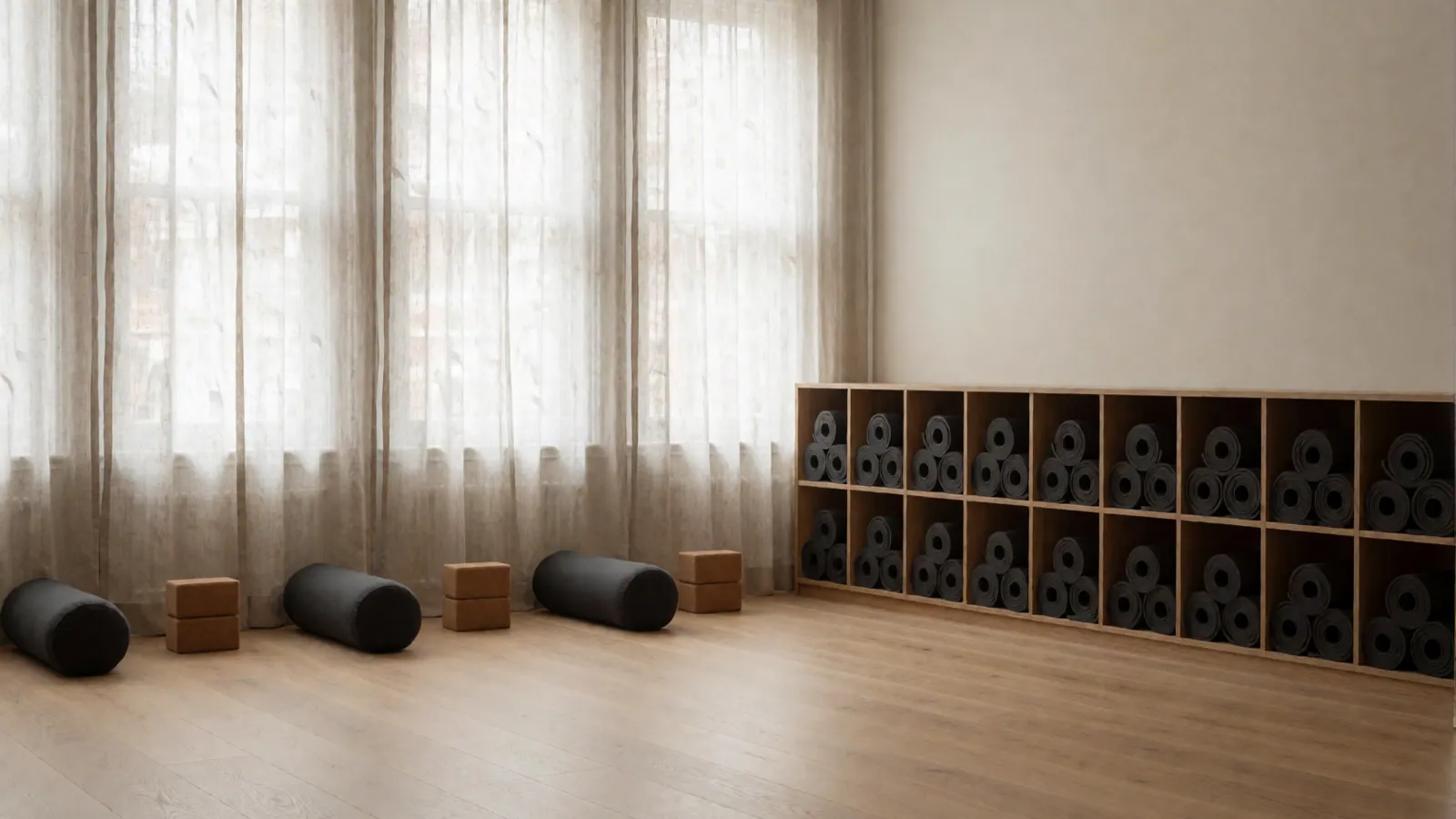
Studio Three has no mirrors and phones stay in the lockers, both deliberately. Mobility work is interoceptive — it depends on feeling where you are rather than seeing it — and a mirror consistently gets in the way of that. It is also, by some distance, the quietest room in the building.

What we actually work on
Chosen by what the movement screens in this building keep finding, not by tradition.
Thoracic extension and rotation
The single most common restriction we screen, and the one that causes shoulder and lower-back problems downstream. Almost everybody who sits at a desk has lost it and almost nobody knows.
Hip extension
Sitting shortens the hip flexors and switches the glutes off, and the lower back compensates. This is the origin of a great many 'my back hurts' conversations that have nothing to do with the back.
Ankle dorsiflexion
Restricted ankles are why people cannot squat to depth without their heels lifting or their knees collapsing inward. It is trainable and it changes squats within weeks.
Overhead shoulder range
Needed for pressing, for reaching a top shelf at seventy, and for not compensating through the lower back. We train the shoulder blade and the thoracic spine together, because the shoulder alone is rarely the problem.
Breathing and rib position
Underneath most of the above. How you breathe determines where your ribs sit, which determines what your spine and hips can do. It is the least glamorous thing in the class and often the most transformative.
End-range strength
Producing force at the edge of a range is what makes the range permanent. This is the part that distinguishes a mobility class from a stretching class, and it is why people leave slightly tired.
The formats
Three distinct classes rather than one class at three speeds.
Yoga & Mobility, 45 minutes
The standard class. A flowing sequence with loaded end-range work built in. Suitable for complete beginners and useful for people who have practised for years.
Express Mobility, 35 minutes
Lunchtime. Focused on one region per session — thoracic, hips or ankles — with no flow component. The most efficient forty minutes available for a desk worker.
Restorative, 45 minutes
Sunday late morning. Long supported holds, breathing, and genuinely doing very little. Not a workout, and not pretending to be one.
Pre-lift mobility, 20 minutes
Not on the timetable — a written sequence Priya gives you at your screen, matched to what your restrictions are. Done on the floor before you train.
Common questions about mobility work
The things people get wrong, including things widely repeated elsewhere.
Stretching before lifting does not prevent injury
Long static stretches before training reduce force production temporarily and do not reduce injury rates. Do your mobility work after training or on its own day, and warm up by moving rather than by stretching.
Being flexible is not the goal
Range you cannot control is not useful and in some joints it is a liability. The aim is range you can produce force in, which is why every session here loads the positions rather than just holding them.
Foam rolling is a warm-up, not a treatment
It reliably makes a joint feel better for about half an hour, which is genuinely useful before training. It does not lengthen tissue or break down anything, whatever you have been told.
Pain is not the same as tightness
A muscle that feels tight is often weak or protecting something rather than short. Stretching it harder makes it worse. This is the single most common thing Priya has to unpick, and it is why she screens rather than assumes.
Consistency beats duration
Ten minutes four times a week changes a range of motion. Ninety minutes on a Sunday does not. The class is a structure; the home sequence is where most of the change actually happens.
Yoga & Mobility in western Queens
A quiet room with no mirrors, aimed at the ranges of motion your training and your desk are taking away.
It starts the same way whatever you are here for: ninety minutes with a coach, a movement screen, a handful of baseline numbers, and a written twelve-week programme in your hand at the end of it. The assessment is free, the programme is yours to keep, and there is nothing to sign.

Questions
Yoga & Mobility — the questions we are asked most
Do I need to be flexible to start yoga?
No, and the people who benefit most are the ones who arrive least flexible. Everything is scaled with blocks and straps, and the class is built around the restrictions our screens actually find rather than around achieving a particular shape. Nobody is looking at you — there are no mirrors in the room.
Is this a spiritual yoga class?
No. It is a mobility and movement class that borrows from yoga because the positions are useful. There is no chanting, no philosophy component and no expectation of any belief. If you want a traditional practice, we will happily recommend somewhere in the neighbourhood that does it properly.
Should I stretch before lifting weights?
Not statically. Long static stretches before training temporarily reduce force production and do not reduce injury rates. Warm up by moving through progressively larger ranges, and do your mobility work after training or on its own day. Priya will write you a short pre-lift sequence at your screen.
What is the difference between mobility and stretching?
Stretching increases how far a joint can be moved passively. Mobility is range you can actively control and produce force in, which is the useful kind. That is why every class here loads the end positions rather than only holding them, and why people leave a little tired.
Can this help my back pain?
Frequently, and often because the problem is not in the back. Hips that do not extend and a thoracic spine that does not rotate force the lower back to do both jobs. That said, Priya is a licensed physical therapist and will tell you plainly when something needs proper clinical assessment rather than a class.
How often should I do mobility work?
Ten to fifteen minutes, four times a week, beats one long weekly session by a wide margin. Take one or two classes a week for structure and coaching, and do the short home sequence on the other days. Consistency is what changes a range of motion.
Do you provide mats and props?
Yes — mats, cork blocks, straps and bolsters are all in Studio Three and included. Plenty of regulars bring their own mat, which is a preference rather than a requirement.
Why are there no mirrors?
Because mobility work depends on feeling where you are rather than seeing it, and a mirror consistently gets in the way of that. Phones stay in the lockers for the same reason. It is the quietest room in the building and we intend to keep it that way.
Related
Members usually pair this with

Group Classes
HIIT & Conditioning
Hard, capped at twenty, and programmed in six-week blocks so it actually gets you fitter.
Read more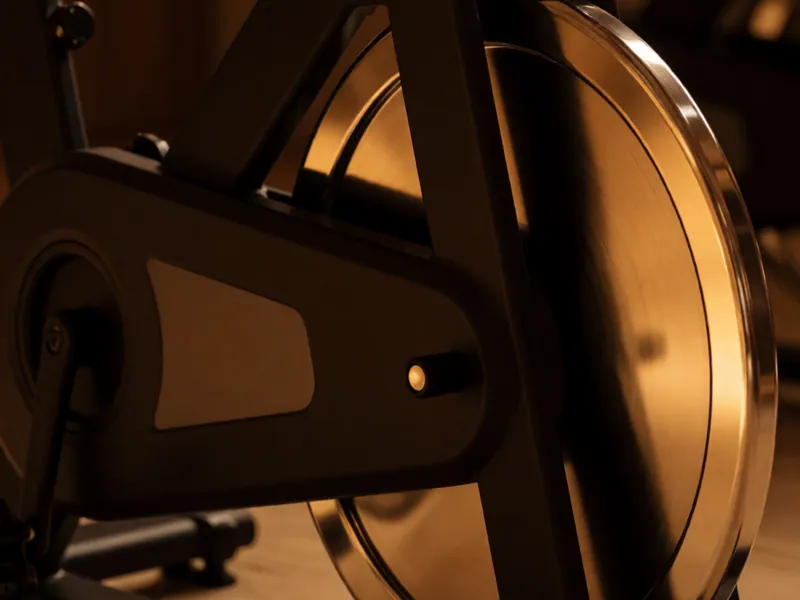
Group Classes
Indoor Cycling
Twenty-four bikes in a room built for twenty-four, with air handling that actually works.
Read more
Group Classes
Boxing Fitness
Real technique on the bags, no sparring, no contact — conditioning that happens to be a skill.
Read moreFree assessment, free trial week, no contract
Book a free 90-minute assessment
Ninety minutes with a coach, nothing to sign, and a written twelve-week programme you keep whether or not you join. Every membership is month to month with no initiation fee and no notice period, and the trial week is free.