Not sure where to start? The ninety-minute assessment is free, involves nothing to sign, and ends with a written twelve-week programme you keep whether or not you join. Call 000-000-0000
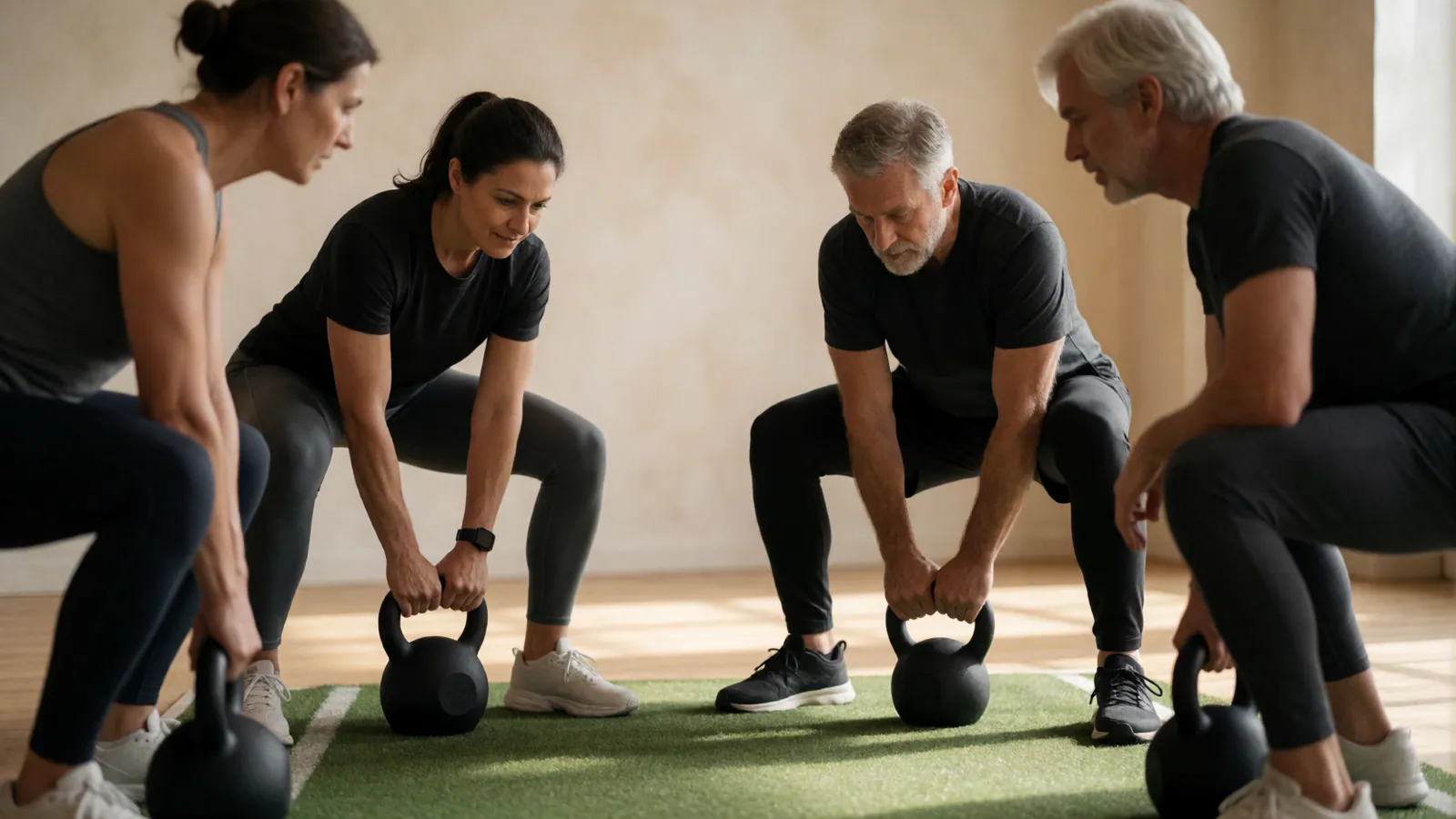
The gap between a group class and a private session is enormous, and small-group training is what fills it. With six people a coach can still watch every rep, correct technique in real time, and load each person differently — which is the thing a class of twenty cannot do no matter how good the instructor is.
It also runs on a programme. Each six-week block has an intention: the loads go up week on week, there is a planned easier week, and what you did last Tuesday determines what you do this Tuesday. This is the opposite of the 'workout of the day' model, where every session is maximally hard, nothing is progressive, and the only measurable thing that accumulates is fatigue.
And it is social in a way that private training is not. Most people who stay with us for years stay partly because of the five other people in their Tuesday and Thursday slot. That is not a soft benefit — attendance is the single strongest predictor of results, and turning up because somebody will notice if you do not is a legitimate mechanism.
How a small-group session runs
Sixty minutes, six people maximum, one coach, and everybody on the same movements at different loads.
Everybody warms up together
A shared preparation sequence, with individual additions for anyone whose screen flagged something. The coach uses this to see how each person is moving today, which sometimes changes their session.
The same main lift, individually loaded
All six people squat. One is on an empty bar, one is on 225 lb, and both are working at the right intensity for them. Individual loading is what makes the format work and it is the thing most 'small group' classes elsewhere do not actually do.
Paired accessory work
Two or three exercises in pairs so that the coach can move between them, and so nobody is standing waiting for a piece of equipment. The pairings are chosen so the two exercises do not compete for the same recovery.
A short finisher, when it fits the block
Sometimes conditioning, sometimes carries, sometimes nothing at all. A block building maximal strength does not end every session with a metabolic finisher just because it feels like a workout should.
Logged for every person
Loads recorded per member, not per session. You can see your own numbers going up over the block, which is the entire point and is invisible in a class.
Small group compared with the alternatives
An honest comparison, including the cases where you should be doing something else.
Compared with a group class
A class of twenty is coached at the room. Small group is coached at you — individual loads, individual corrections, individual progressions. Classes are excellent for conditioning and for the atmosphere; they are not where you learn to lift.
Compared with private coaching
Private gives you eyes on every single rep and a programme built for exactly one person. Small group gives you most of that for around a quarter of the cost. If you have a complex injury history or a very specific deadline, go private.
Compared with training alone
Alone you get flexibility and no cost. You also get no external eye on your technique, no accountability, and — in our experience — a programme that stops changing after about month three. Plenty of experienced members train alone and come to small group once a week to keep themselves honest.
Compared with online coaching
Online gives you the programme and the accountability without the room. Small group gives you the room, the correction and the other five people. Members who travel constantly often run online as their base and drop into small group when they are home.
The groups we run
Every group is capped at six and holds the same six people for a six-week block, which is what lets it be genuinely progressive.
Strength Foundations
The default entry point. Squat, hinge, press, row, carry, taught properly and loaded slowly. Most beginners spend two or three blocks here and leave able to train anywhere in the world.
General Strength
For members past the foundations stage. Heavier, more specialised, with accessory work chosen per person. This is where most of our long-term members live.
Senior Strength
Same principles, adjusted pacing, and an emphasis on the qualities that predict independence — grip, balance, getting off the floor, and standing up from a chair quickly.
Postnatal Foundations
Breathing, pressure management, deep core and progressive loading, run by Priya. Requires provider clearance and a short private screen before joining.
Open Coaching Hour
Not a group and not booked: a coach simply stands on the strength floor for an hour and answers anything. Free to every member, twice a week, and the most under-used thing in the building.
Small-Group Training in western Queens
Six people, one coach, one programme — the coaching of a private session at a fraction of the price.
It starts the same way whatever you are here for: ninety minutes with a coach, a movement screen, a handful of baseline numbers, and a written twelve-week programme in your hand at the end of it. The assessment is free, the programme is yours to keep, and there is nothing to sign.

Questions
Small-Group Training — the questions we are asked most
How many people are in a small-group session?
Six, and that is a hard cap rather than a target. A seventh person changes what the coach can see, which is the entire product. If a group is full you go on the waitlist for that slot or take a different one — we do not add bodies to a room.
Is small-group training good for beginners?
It is one of the best formats for beginners, provided the group is genuinely capped and genuinely progressive. Our Strength Foundations group exists specifically for people in their first six months, and most beginners do two or three six-week blocks in it before moving on.
How is this different from a group fitness class?
Individual loading and individual correction. In a class of twenty everybody does broadly the same thing at broadly the same intensity. In a group of six, all six people are on the same movement at six different weights, with the progression tracked for each of them separately.
Do I need to commit to the whole six-week block?
No, but you will get considerably more out of it if you do, because the block is designed to progress week on week. Drop-ins at $40 are welcome; members who attend four of the six weeks see roughly double the strength gain of members who attend two.
Can I do small group and private sessions together?
Yes, and it is a very common combination — one private session a week to work on technique and specifics, plus two small-group sessions for volume and accountability. The One-to-One membership is built around exactly this pattern.
What if I am much weaker than everyone else in the group?
It matters far less than you expect, because everybody is on a different load anyway. In practice the strongest and weakest people in a Strength Foundations group are often four hundred pounds apart on a deadlift and neither of them notices after the second week.
Are the groups mixed ability?
The general groups are, deliberately. Foundations, Senior Strength and Postnatal Foundations are not — those are grouped by stage because the coaching cues and the pacing genuinely differ. Your assessment decides which group you start in.
What is Open Coaching Hour?
A coach stands on the strength floor for sixty minutes on Saturday and Sunday and answers anything any member asks — is this right, why does this hurt, how do I use this, what should I do instead. It is free, needs no booking, and is the fastest way we know to fix a technique problem you did not know you had.
Related
Members usually pair this with
Coaching
Personal Training
One coach, one written programme, and somebody whose job it is to notice whether it is working.
Read more
Coaching
Online Coaching
A written programme, video form review and a real coach — for people who train somewhere else, or everywhere.
Read more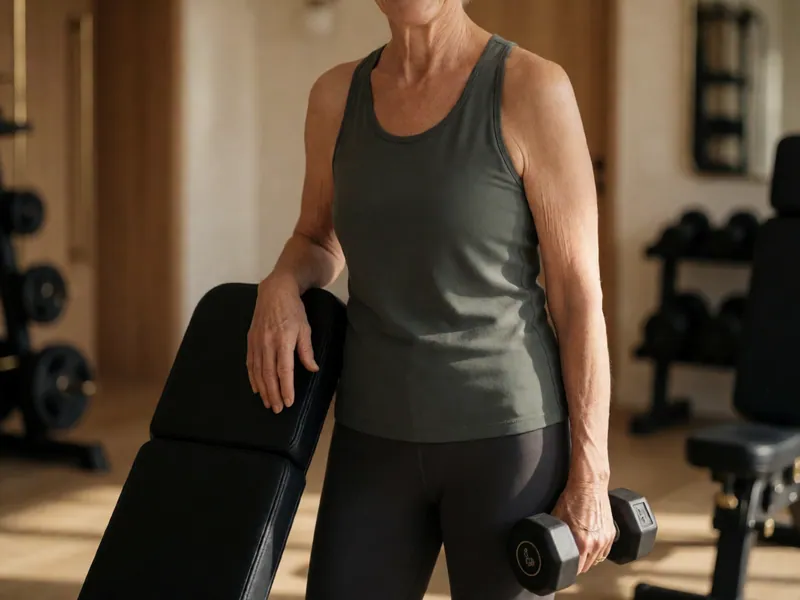
Coaching
Senior Fitness
Strength training for adults over sixty, aimed squarely at staying independent rather than at looking busy.
Read moreFree assessment, free trial week, no contract
Book a free 90-minute assessment
Ninety minutes with a coach, nothing to sign, and a written twelve-week programme you keep whether or not you join. Every membership is month to month with no initiation fee and no notice period, and the trial week is free.