Not sure where to start? The ninety-minute assessment is free, involves nothing to sign, and ends with a written twelve-week programme you keep whether or not you join. Call 000-000-0000
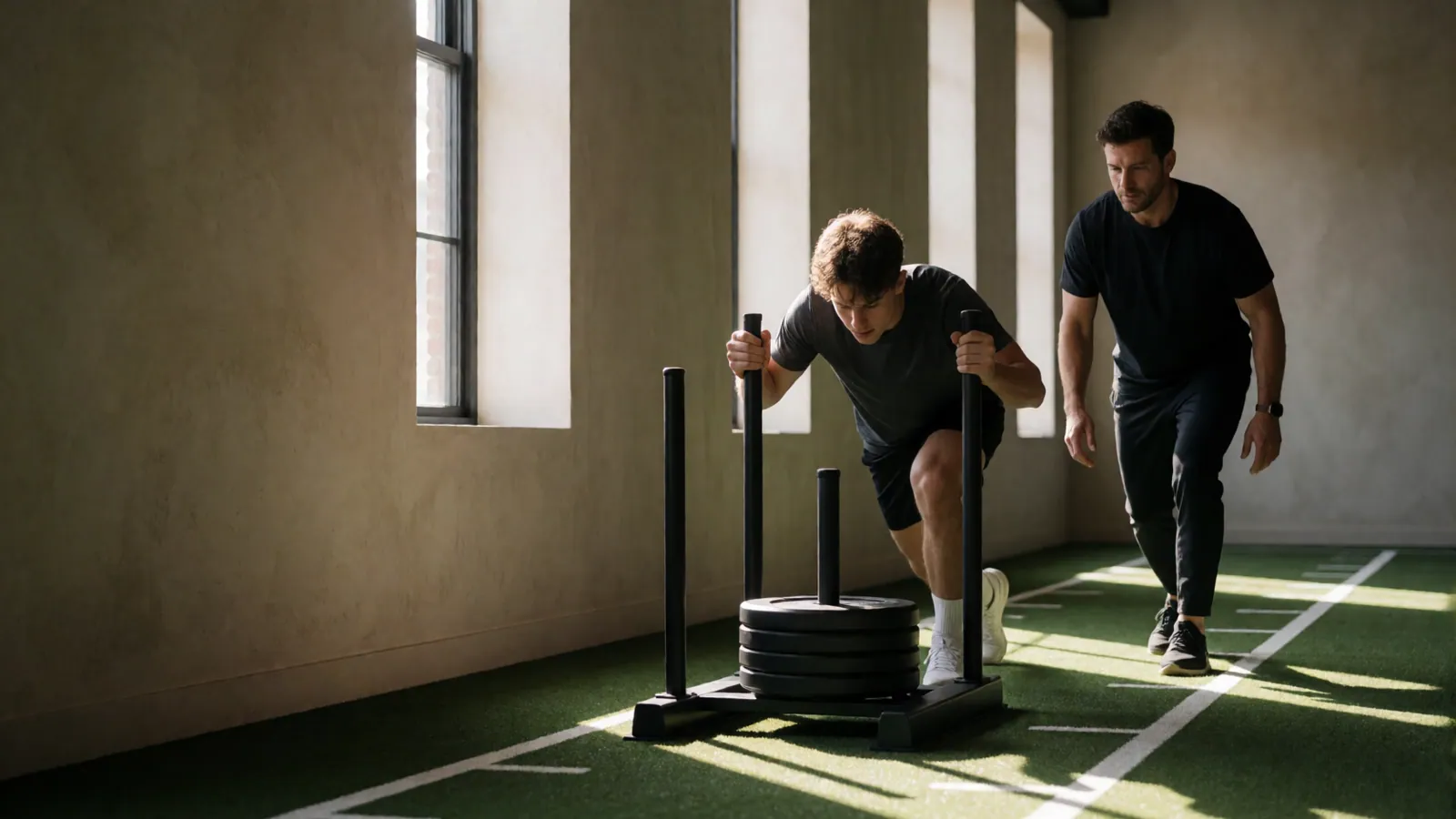
The single most valuable thing a strength coach does for an athlete is keep them on the field. Availability beats almost every other quality — the fastest athlete in the league is worth nothing in a boot, and the largest share of that risk is in the qualities we can actually train: eccentric hamstring strength, landing mechanics, deceleration ability, and the capacity to tolerate the volume the sport demands.
Devon runs this. He came through collegiate strength and conditioning and holds a certified strength and conditioning specialist credential, which is the qualification the field actually recognises. He works with high-school and college athletes, a handful of semi-professionals, and a steady stream of serious amateurs in running, cycling, martial arts and racquet sports.
We do not coach sport skill. We are not going to teach you to shoot, tackle, serve or throw, and any facility promising to do both that and strength work well is doing one of them badly. We will happily talk to your sport coach, and we will not contradict them on anything that belongs to their domain.
What we train, in priority order
Ordered by what most reduces injury risk and most improves performance, which is not the order most athletes would choose.
Eccentric hamstring strength
Hamstring strains are the most common non-contact injury across most field sports, and eccentric strength is the best-evidenced protection against them. Nordic curls and their progressions appear in essentially every programme here.
Deceleration and landing
Most non-contact knee injuries happen on landing or on a cut, not on a sprint. How to absorb force is a coachable skill and is taught almost nowhere. It is the first block of every new athlete's programme.
Maximal strength
The base that power is built on. An athlete who cannot squat their bodyweight has a strength problem masquerading as a speed problem, and the fastest route to being faster is usually being stronger.
Rate of force development
Jumps, throws, and lifting moving quickly against submaximal loads. Strength expressed fast is what sport actually requires, and it is a distinct quality from strength itself.
Sprint mechanics
Acceleration and top-speed technique, trained fresh at the start of a session. Sprinting is a skill and it degrades when practised tired, which is why so much 'speed work' produces conditioning instead.
Work capacity, matched to the sport
Energy-system work built from the actual demands of your sport rather than from generic conditioning. A wrestler and a marathoner should not be doing the same intervals.
How a season is periodised
Built backwards from your competition calendar. Give us your season dates and the programme writes itself around them.
Off-season — the build
The most productive block of the year. Heavy strength work, muscle where it is needed, and the technical foundation. Three or four sessions a week. Almost every meaningful physical improvement happens here.
Pre-season — the conversion
Strength converts to power and speed. Volume drops, intensity and velocity rise, sprint and jump work dominate. Sport volume is climbing at the same time, so total load is managed carefully.
In-season — maintenance
Two short sessions a week, deliberately lighter, aimed squarely at holding what was built. Athletes who stop lifting entirely in-season lose most of their off-season gains by the play-offs. This is the block most commonly done wrong.
Transition — real rest
Two to four weeks a year of genuinely doing very little. It is the block athletes and parents resist hardest and the one that most reliably prevents both burnout and overuse injury.
Testing and what we measure
Retested every twelve weeks. If we cannot measure it, we do not claim to have improved it.
Sprint times over short distances
Acceleration is what most field sports actually use. Timed with gates rather than a stopwatch, because hand timing has more error than the improvement you are looking for.
Vertical and broad jump
Simple, reliable proxies for lower-body power, and sensitive enough to show fatigue. A jump height that has dropped several per cent is a useful early warning that an athlete is overreaching.
Maximal strength in two or three lifts
Squat or trap-bar deadlift, and a press. Tested with submaximal estimates in-season rather than by grinding out true maximums during a competitive period.
Eccentric hamstring strength
Measured directly. The number that most predicts whether the season ends early.
Change of direction
A timed cut test. Slower here than a straight sprint would predict usually means a deceleration problem rather than a speed one.
Body composition, where it is relevant
Measured for sports with weight classes or where mass genuinely matters, and deliberately not measured otherwise. It is an easy number to become unhealthily interested in.
Sports Performance in western Queens
Speed, power and durability for competitive athletes, periodised around your actual season.
It starts the same way whatever you are here for: ninety minutes with a coach, a movement screen, a handful of baseline numbers, and a written twelve-week programme in your hand at the end of it. The assessment is free, the programme is yours to keep, and there is nothing to sign.

Questions
Sports Performance — the questions we are asked most
Will strength training make me slower?
No — the opposite, in almost every case. Speed is force applied to the ground in a short time, and stronger athletes apply more force. Athletes get slower from carrying unnecessary mass or from training so much they are permanently fatigued, neither of which is a property of strength training itself.
How do you train around my season?
We build backwards from your competition dates. The off-season carries the heavy work, pre-season converts it to speed and power, in-season drops to two short maintenance sessions a week, and there is a genuine rest block once a year. Send us your calendar at the assessment and the programme is built around it.
Should I keep lifting during my season?
Yes, and it is the most commonly skipped block. Two short, lighter sessions a week hold onto what you built in the off-season. Athletes who stop entirely lose most of their gains by the play-offs, which is exactly when they need them.
Do you coach my actual sport?
No. We coach strength, speed, deceleration, landing and work capacity — the physical qualities underneath your sport. We will talk to your sport coach whenever it is useful and we will not contradict them on technique that belongs to their domain.
What makes a coach qualified to train athletes?
The certified strength and conditioning specialist credential is the one the field genuinely recognises, and Devon holds it along with six years in collegiate strength and conditioning. Ask any facility what their athlete coach is certified by — the answer is informative either way.
How much does sports performance training cost?
The performance assessment is $140 and includes sprint, jump and strength testing plus a written report. After that, private sessions are $95, the athlete membership including two coached sessions a week and quarterly testing is $265 a month, and team blocks for up to sixteen athletes are $1,400 for ten sessions.
Can you work with my team?
Yes. Off-season team blocks run ten sessions for up to sixteen athletes, here or at your facility. Contact us with your season dates and squad size and we will build backwards from your first competition.
What do you actually test?
Timed short sprints with gates, vertical and broad jump, maximal strength in two or three lifts, eccentric hamstring strength, and a change-of-direction test. Retested every twelve weeks. If we cannot measure something, we will not claim to have improved it.
Related
Members usually pair this with
Strength & Performance
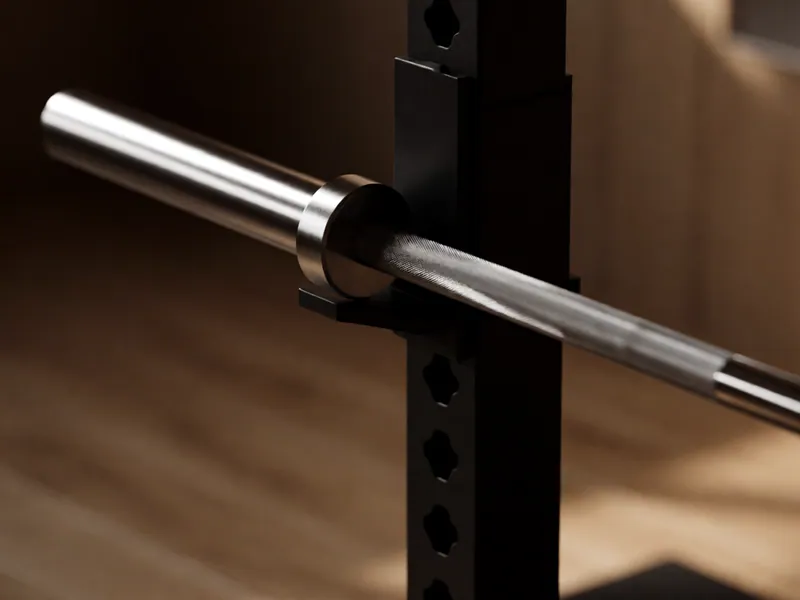
Strength Training
Ten platforms, calibrated plates, and a programme where the numbers go up on purpose rather than by accident.
Read more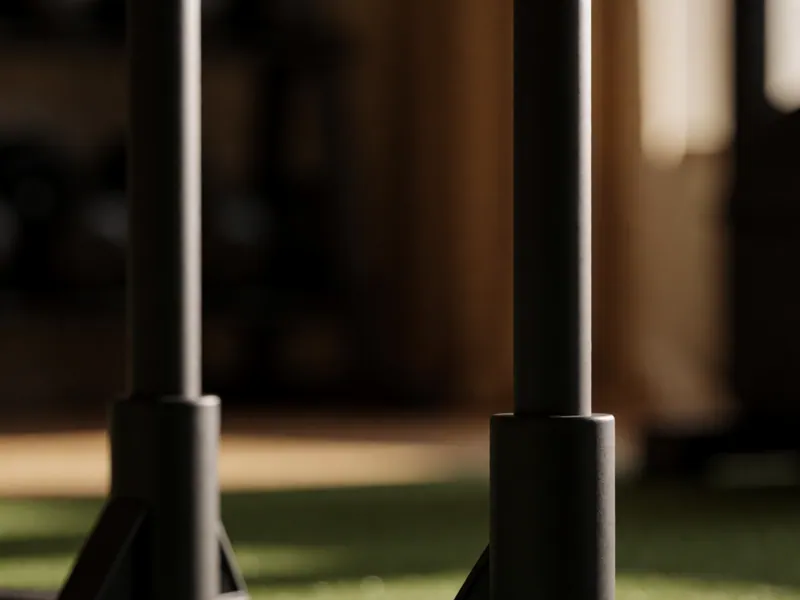
Strength & Performance
Functional Fitness
Sleds, carries, rigs and turf — training that transfers directly to the things you do outside this building.
Read more
Strength & Performance
Weight Loss Coaching
Strength training, a nutrition conversation with a registered dietitian, and no meal plan you cannot cook.
Read moreFree assessment, free trial week, no contract
Book a free 90-minute assessment
Ninety minutes with a coach, nothing to sign, and a written twelve-week programme you keep whether or not you join. Every membership is month to month with no initiation fee and no notice period, and the trial week is free.