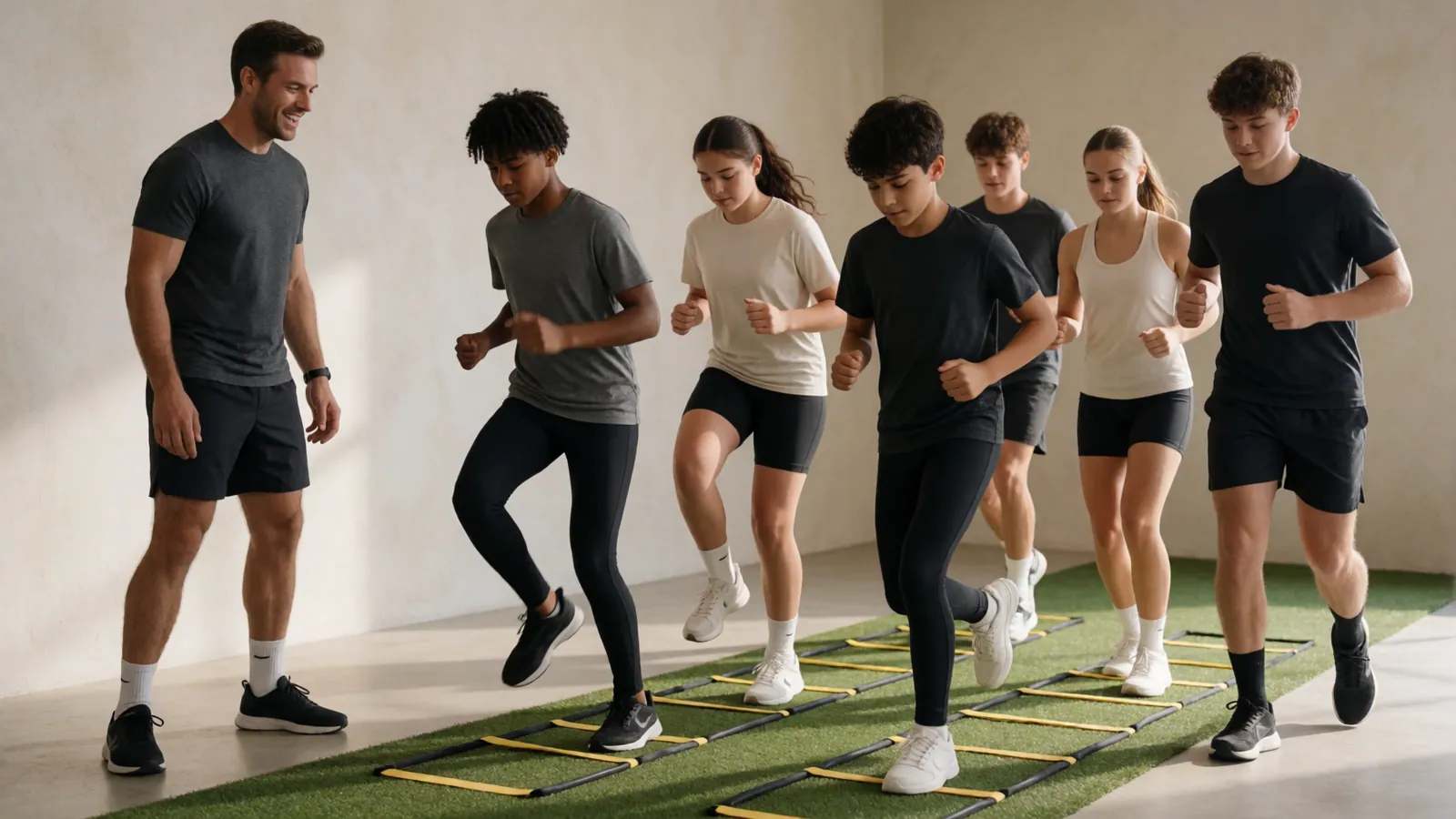
Not sure where to start? The ninety-minute assessment is free, involves nothing to sign, and ends with a written twelve-week programme you keep whether or not you join. Call 000-000-0000
The old worry that lifting stunts growth has no support in the research and has not had for decades. What the research does show is that young athletes who follow a properly coached strength programme get injured less in their sport, and that the biggest single risk factor for a teenage injury is playing one sport year-round with no strength work at all.
Devon runs this programme. He spent six years in collegiate strength and conditioning before concluding that he would rather coach fifteen-year-olds well than repair twenty-year-olds who had been coached badly. Sessions are Thursday and Friday afternoons, capped at twelve, and every athlete is screened before they touch a bar.
We are also honest with parents about what this is not. It is not sport-specific skill training — we do not coach basketball or football or track technique, and any programme that claims to do both is doing one of them poorly. It is the strength, speed, landing mechanics and work capacity underneath the sport, which is the part almost nobody else is providing.
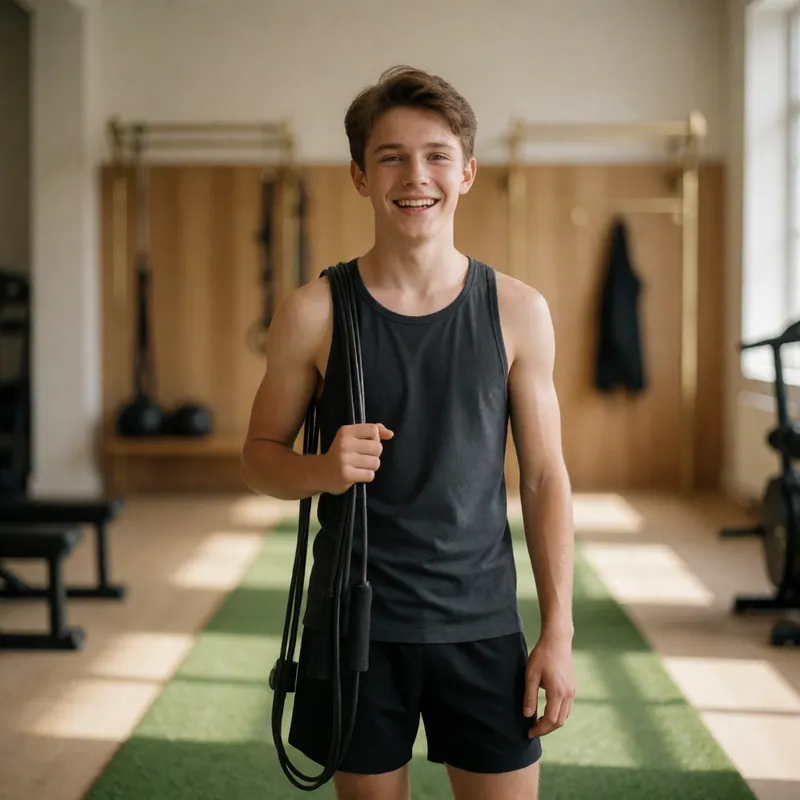
What a youth session contains
Ninety minutes, twelve athletes maximum, one certified specialist and one assistant coach.
Movement preparation and landing mechanics
How to decelerate and land is the single most transferable injury-prevention skill available, and it is taught almost nowhere. It is the first twenty minutes of every session for the first two blocks.
Sprint and change-of-direction work
Acceleration mechanics, deceleration, and cutting. Trained fresh, at the start of the session, because speed work done tired is just conditioning with worse technique.
Strength, taught from the ground up
Bodyweight competence first, then loaded. Squat, hinge, push, pull and carry. Technique standards are strict and load is earned rather than assumed.
Posterior chain and hamstring work
Nordic curls, hip hinges and eccentric loading. Hamstring strains are the most common non-contact injury in adolescent sport and eccentric strength is the best-evidenced defence against them.
Work capacity, at the end
Sleds, carries and short intervals. Conditioning goes last because it interferes with everything placed after it.
An education component
Sleep, food, and why the twelve-year-old who plays one sport every month of the year is the one who gets hurt. Delivered to athletes, and repeated to parents, because the parents are usually the ones scheduling.
What parents should know
The questions we get asked most, answered the way we would want them answered about our own children.
Lifting does not stunt growth
There is no evidence for it. The growth-plate concern comes from injuries in unsupervised maximal lifting, which is a coaching failure rather than a property of resistance training. Supervised youth strength programmes have injury rates well below almost every organised sport.
Year-round single-sport play is the actual risk
Early specialisation is associated with higher injury rates and higher burnout. If your child plays one sport in every season of the year, that is a bigger conversation than anything we do here.
We do not coach their sport
We coach the strength, speed and landing mechanics underneath it. We will happily talk to their sport coach, and we will not contradict them on technique that belongs to their sport.
Parents are welcome to watch
Every session, from the seating on the north side of the functional zone. We would rather you saw what happens than trusted a description of it.
Attendance beats intensity here more than anywhere
An athlete who does two sessions a week for two seasons will be transformed. An athlete who does four for six weeks and then stops will not. We schedule around their sport's season and reduce volume during competition.
How the year is structured
Built around their competitive season rather than around ours.
Off-season — build
The heaviest and most productive block. Strength and muscle are built here, and everything in the season depends on it. Three sessions a week if their schedule allows.
Pre-season — convert
Strength converts to speed and power. More sprinting, more jumping, less total volume. This is where the numbers that matter on the field start to show.
In-season — maintain
Two short sessions a week, deliberately lighter. The goal is holding what was built while their sport takes the load. Athletes who stop lifting entirely in-season lose most of it by the play-offs.
Transition — rest, properly
Two to four weeks of genuinely doing very little, at least once a year. It is the block parents are most likely to resist and the one that most reliably prevents burnout.
Youth Athletics in western Queens
Strength and speed work for teenage athletes — coached properly, which is what makes it one of the safest things they do.
It starts the same way whatever you are here for: ninety minutes with a coach, a movement screen, a handful of baseline numbers, and a written twelve-week programme in your hand at the end of it. The assessment is free, the programme is yours to keep, and there is nothing to sign.

This page is general information, not medical advice. Nothing here is a diagnosis, a treatment plan or a substitute for your own physician, physical therapist or registered dietitian. If you have a cardiac condition, uncontrolled blood pressure, a recent surgery, a current injury, an eating disorder or a pregnancy, speak to your provider before starting or changing a training or nutrition programme — and tell us what they say, because we build around written clearance rather than around what somebody remembers being told. Pain at rest, pain that wakes you at night, worsening symptoms or any neurological symptom need proper clinical assessment first, and we will say so rather than train through them.
Questions
Youth Athletics — the questions we are asked most
At what age can a child start strength training?
Around thirteen for our programme, though the research supports supervised resistance training from considerably younger where the coaching is competent and the loads are appropriate. The determining factor is emotional readiness to follow instructions in a group, not a birthday — we screen every athlete individually before they start.
Does lifting weights stunt growth in teenagers?
No. There is no evidence supporting it, and supervised youth strength training has lower injury rates than almost every organised sport. The growth-plate concern originates in unsupervised maximal lifting, which is a coaching failure and not a property of resistance training itself.
Will this make my child better at their sport?
It will make them stronger, faster, better at landing and decelerating, and measurably less likely to be injured. Those things usually translate into playing better, mostly by way of playing more. We do not coach sport skill, and any programme claiming to do both well is doing one of them badly.
How many days a week should a teenage athlete train?
Two in-season, three in the off-season, and that is generous. Their sport is already training volume. The single most common problem we see is a young athlete doing four sports sessions, two gym sessions and a game every week, and then being surprised by a hamstring strain.
Can parents watch the sessions?
Yes, every session, from the seating alongside the functional zone. We prefer it. Watching also makes the conversation about sleep, food and rest weeks much easier to have.
What if my child has never lifted anything?
That is the normal case. The first block is bodyweight competence and landing mechanics with no external load at all, and load is earned against a technique standard rather than granted by age or by enthusiasm.
Do you work with school or club teams?
Yes — we run off-season team blocks for up to sixteen athletes, either here or at your facility. Ten sessions is the usual arrangement. Contact us with your season dates and we will build backwards from your first competition.
Is there a summer programme?
Yes, a six-week intensive running three sessions a week from June through August, which is when the largest gains of the year are available. It fills early, and priority goes to athletes already in the twice-weekly programme.
Related
Members usually pair this with
Coaching
Personal Training
One coach, one written programme, and somebody whose job it is to notice whether it is working.
Read more
Coaching
Small-Group Training
Six people, one coach, one programme — the coaching of a private session at a fraction of the price.
Read more
Coaching
Online Coaching
A written programme, video form review and a real coach — for people who train somewhere else, or everywhere.
Read moreFree assessment, free trial week, no contract
Book a free 90-minute assessment
Ninety minutes with a coach, nothing to sign, and a written twelve-week programme you keep whether or not you join. Every membership is month to month with no initiation fee and no notice period, and the trial week is free.