Not sure where to start? The ninety-minute assessment is free, involves nothing to sign, and ends with a written twelve-week programme you keep whether or not you join. Call 000-000-0000
Sleep is the recovery intervention. Everything else in this room is a distant second, and any facility that tells you otherwise is selling you something. If you sleep six hours a night, no sauna, plunge, massage gun or compression boot will compensate for it, and the honest thing to say is that the money would be better spent on a blackout blind.
That said, the two things we have installed are worth having. Regular sauna use has a reasonable body of evidence behind it for cardiovascular health and for sleep quality, and it is pleasant, which matters because an intervention nobody enjoys is an intervention nobody repeats. Cold immersion is genuinely effective at making you feel better quickly, and has one important caveat that most facilities do not mention.
That caveat: cold water immediately after resistance training appears to blunt some of the adaptation you just trained for. If you are chasing strength or muscle, plunge on rest days or several hours later. On a competition day, or the day after a race, or simply on a Wednesday when you feel wrecked, it is excellent. We would rather tell you this than sell you a plunge.
What is in the recovery suite
Seven hundred square feet, and deliberately no gadget wall.
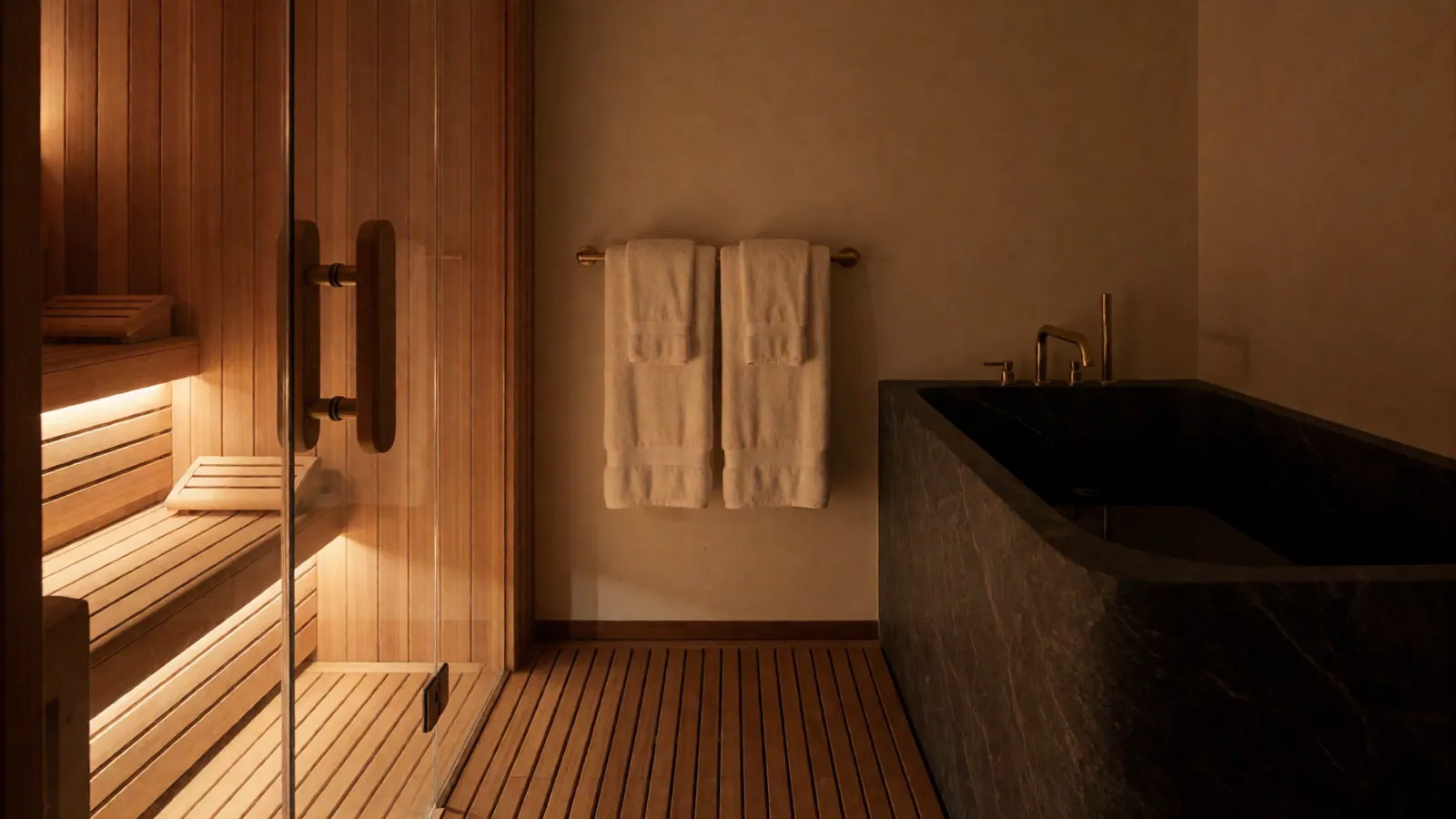
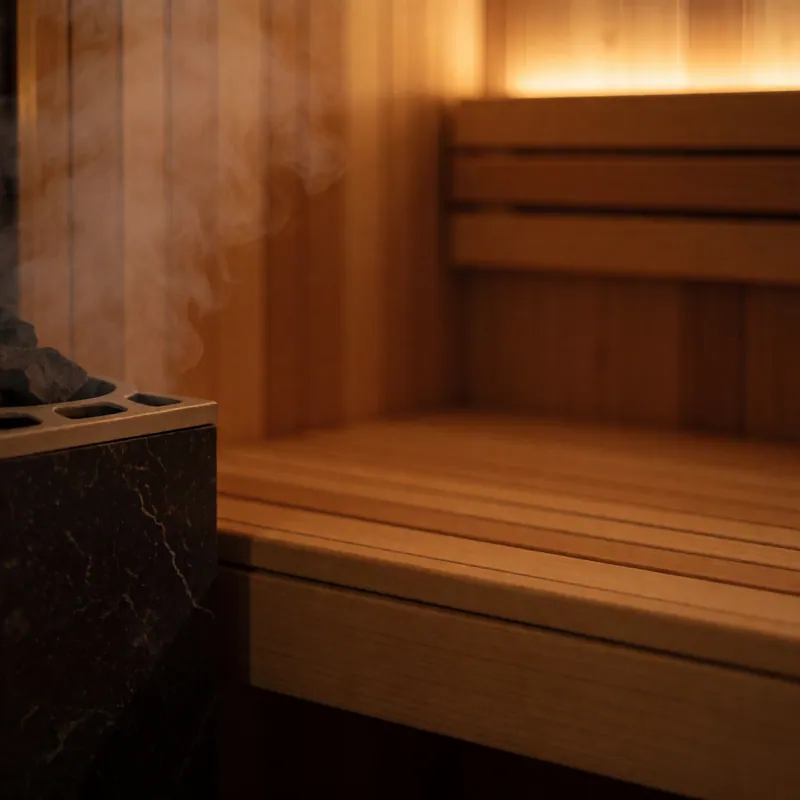
A six-person cedar sauna
Held between 175 and 195 °F, dry, with a bench at two heights. Cedar because it holds temperature evenly and does not get unpleasantly hot to sit on.
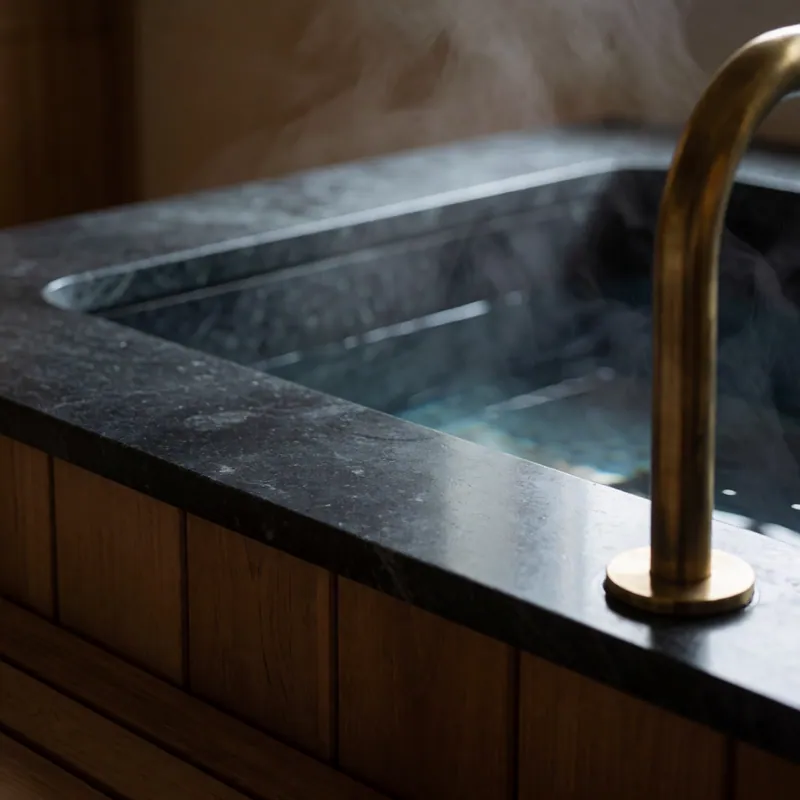
A cold plunge at 48 to 52 °F
Single occupancy, filtered continuously, with the temperature displayed at the desk and logged daily. Cold enough to be effective and not so cold as to be a hazard for people using it unsupervised.
A mobility area
Rollers, bands, a mobility rig and floor space. This is where Priya's home sequences get done, and it is the most genuinely useful part of the room.
A quiet room
Four chairs, low light, and nothing to do in it. No screens, no music, no phones. Ten minutes here at the end of a session does more for most people than anything else in the suite.
Showers immediately adjacent
Because the practical experience of a sauna is largely determined by how far you have to walk afterwards.
No gadget wall
No compression boots, no percussion guns, no vibration plates, no light panels. The evidence for each ranges from thin to absent, and the space is better used as floor.
How to actually use it
Practical protocols, and the honest state of the evidence for each.
Sauna, for general health
Fifteen to twenty minutes, two to four times a week, is where most of the observational evidence sits. Consistency matters far more than duration or heat, and it does not need to be after training.
Sauna, for sleep
Late afternoon or early evening works best for most people. The mechanism is the temperature drop afterwards rather than the heat itself, so leave an hour before bed rather than going straight from bench to bed.
Cold, for feeling better now
Two to five minutes at our temperature is plenty. Longer is not better and the returns fall off quickly. It reliably reduces perceived soreness, which is a genuine benefit even where the mechanism is debated.
Cold, and the strength caveat
Immediately after resistance training it appears to blunt some of the adaptation. If you are chasing strength or muscle, plunge on rest days or at least four hours later. Before a competition or between events, use it freely.
Contrast, alternating
Popular, pleasant, and the evidence for it being superior to either alone is weak. If you enjoy it, do it. It is not doing anything the individual components are not.
What actually works best
Sleep, food, and a programme with planned easier weeks in it. This room is a genuine supplement to those three and cannot substitute for any of them.
Safety rules, which we enforce
Short, and non-negotiable. Heat and cold are both physiologically real.
Never use the plunge alone in the building
Cold water immersion carries a real risk of cold shock. The suite is open only during staffed hours and there is a call button beside the tub.
No alcohol, before or during
Both heat and cold plus alcohol is a genuinely dangerous combination and it is the most common factor in sauna incidents anywhere.
Cardiac conditions, pregnancy and blood pressure
Ask your physician first, and tell us. Neither is automatically off limits and both need medical input rather than our opinion.
Hydrate before the sauna, not after
You lose a substantial amount of fluid in twenty minutes. Drink beforehand and afterwards, and do not use the sauna to 'sweat out' anything at all.
Leave when you want to leave
There is no benefit to enduring either one. The person who sits in the sauna for thirty minutes to prove something is not getting more out of it than the person who leaves at fifteen.
Shower before both
Ordinary courtesy, and it keeps the plunge filtration working as intended.
Recovery & Sauna in western Queens
A cedar sauna, a cold plunge held near fifty degrees, and honest guidance about when each one helps.
It starts the same way whatever you are here for: ninety minutes with a coach, a movement screen, a handful of baseline numbers, and a written twelve-week programme in your hand at the end of it. The assessment is free, the programme is yours to keep, and there is nothing to sign.
This page is general information, not medical advice. Nothing here is a diagnosis, a treatment plan or a substitute for your own physician, physical therapist or registered dietitian. If you have a cardiac condition, uncontrolled blood pressure, a recent surgery, a current injury, an eating disorder or a pregnancy, speak to your provider before starting or changing a training or nutrition programme — and tell us what they say, because we build around written clearance rather than around what somebody remembers being told. Pain at rest, pain that wakes you at night, worsening symptoms or any neurological symptom need proper clinical assessment first, and we will say so rather than train through them.
Questions
Recovery & Sauna — the questions we are asked most
Is a cold plunge good for recovery?
It reliably reduces how sore you feel, which is a real benefit. The important caveat is that cold immersion immediately after resistance training appears to blunt some of the muscle and strength adaptation you just trained for — so if you are chasing strength, plunge on rest days or at least four hours later. Before or between competitions, use it freely.
How long should I stay in the sauna?
Fifteen to twenty minutes, two to four times a week, is where most of the evidence sits. Consistency matters more than duration or temperature, and there is no benefit to enduring longer than is comfortable. Leave when you want to leave.
How cold is the plunge?
Held between 48 and 52 °F, displayed at the desk and logged daily. Two to five minutes is plenty at that temperature; longer produces rapidly diminishing returns.
Can I use the sauna if I have high blood pressure?
Ask your physician first, and tell us what they say. It is not automatically off limits — sauna use has reasonable cardiovascular evidence behind it — but that is a medical decision rather than one for a gym to make on your behalf.
Do I need to book the sauna or plunge?
No. Both are first come, first served during staffed hours. The suite is closed outside staffed hours because nobody should use a cold plunge alone in a building, and there is a call button beside the tub.
Is the recovery suite included in my membership?
Coached members have access outside peak hours and One-to-One members at any staffed hour. Foundation members can add it for $25 a month or pay $15 per session. The mobility area and quiet room are included at every tier.
Do you have compression boots or a massage gun?
No, deliberately. The evidence for that whole category ranges from thin to absent, and the floor space is more useful as a mobility area. If you want a percussion gun, they are inexpensive and you should buy one for home rather than pay a gym for access to one.
What actually helps recovery most?
Sleep, by a very wide margin, then adequate food and a training programme with planned easier weeks built into it. This room is a genuine supplement to those three and cannot substitute for any of them. Any facility telling you otherwise is selling something.
Related
Members usually pair this with
Wellness & Recovery
Nutrition Coaching
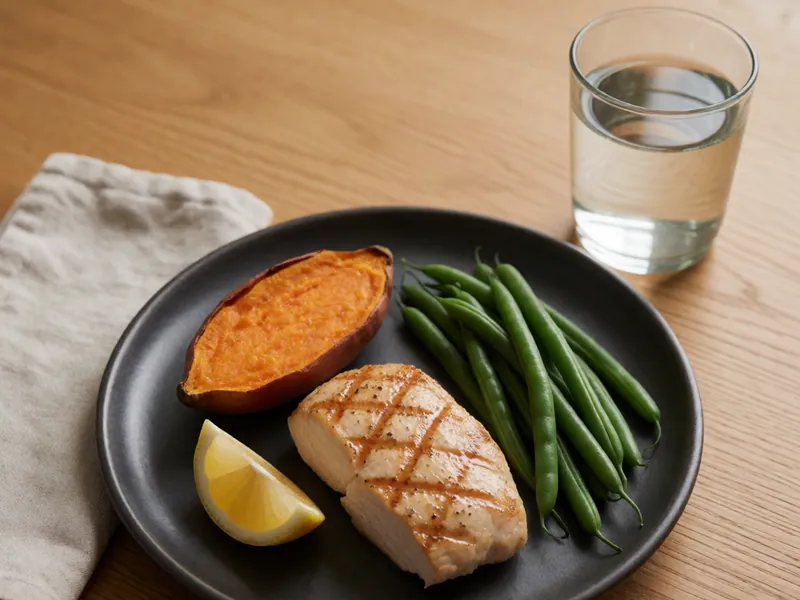
A registered dietitian, no supplements for sale, and no plan built around food you will not cook.
Read more
Wellness & Recovery
Post-Rehab Training
The gap between your last physical therapy appointment and training normally, bridged in writing.
Read more
Wellness & Recovery
Corporate Wellness
Coached sessions for local teams, scheduled inside the working day where attendance actually holds up.
Read moreFree assessment, free trial week, no contract
Book a free 90-minute assessment
Ninety minutes with a coach, nothing to sign, and a written twelve-week programme you keep whether or not you join. Every membership is month to month with no initiation fee and no notice period, and the trial week is free.