Not sure where to start? The ninety-minute assessment is free, involves nothing to sign, and ends with a written twelve-week programme you keep whether or not you join. Call 000-000-0000
Almost everybody who walks into a gym would be better served by getting stronger than by anything else they are currently doing. Strength improves body composition, bone density, insulin sensitivity, injury resistance, balance and — for older adults — the probability of remaining independent. Nothing else on the menu does that many things at once.
But strength training is also the discipline with the highest technical demand and the longest feedback loop. A badly coached squat hurts you in a way that a badly used machine will not, and progress arrives on a scale of months rather than sessions. That combination is why so many people try it, do it badly, hurt something and conclude it is not for them.
So we teach it slowly and we write it down. Tomasz will keep a beginner on an empty bar for three weeks if the pattern needs it, and it will still be the fastest route to a real squat. Every session is logged — weight, sets, reps, and how hard it felt — because progression stops being a feeling and becomes arithmetic, and arithmetic is what separates people who get stronger from people who go to the gym.
What we actually coach
Five patterns. Everything else in the building is an accessory to these.
The squat
The most technically demanding of the five and the one that most rewards patient coaching. Back squat, front squat and box squat all have a place, and which one you start with depends on your ankles and your thoracic spine rather than on tradition.
The hinge
Deadlifts, Romanian deadlifts and kettlebell swings. The pattern most people cannot perform at all on day one, and the one that most transforms a lower back once they can. Taught with a dowel before it is taught with a bar.
The press
Overhead and bench. Overhead pressing is where restricted shoulders and thoracic spines get exposed, which is useful information rather than a reason to avoid it. Bench technique is far more of a full-body skill than people expect.
The pull
Rows, chin-ups and pulldowns. Chronically under-trained relative to pressing in almost everybody who arrives self-coached, and the most common reason a bench press has stalled.
The carry
Farmer's walks, suitcase carries, front-racked carries. Trains grip, trunk, hips and balance simultaneously and translates directly into ordinary life. Pound for pound the most useful exercise here and the least fashionable.
How a strength programme is actually built
The structure is the product. Anybody can write a hard workout; the difficulty is writing fifty-two of them that relate to each other.
Six-week blocks with an intention
Each block emphasises something — technique, volume, intensity, or peaking toward a test. Blocks that all look the same are not a programme, they are a routine that happens to change exercises.
Progressive overload, in writing
Small, systematic increases in load or volume, recorded every session. Five pounds a fortnight sounds trivial and compounds into something remarkable across a year. Nothing else replaces it.
A planned easier week
Roughly every fifth week, volume drops by about a third. People routinely set personal bests the following week. Almost nobody does this on their own and it is why almost everybody self-coached stalls.
Accessory work chosen for your weak point
The specific thing holding your main lifts back — usually upper back, usually hamstrings, occasionally grip. Generic accessory lists are why generic programmes stop working.
Testing, on a schedule
Every twelve weeks, the same lifts measured the same way. Testing constantly is its own training error; never testing means you have no idea whether the programme worked.
The strength floor itself
Equipment matters less than programming, and it is not irrelevant.
Ten racks, ten platforms
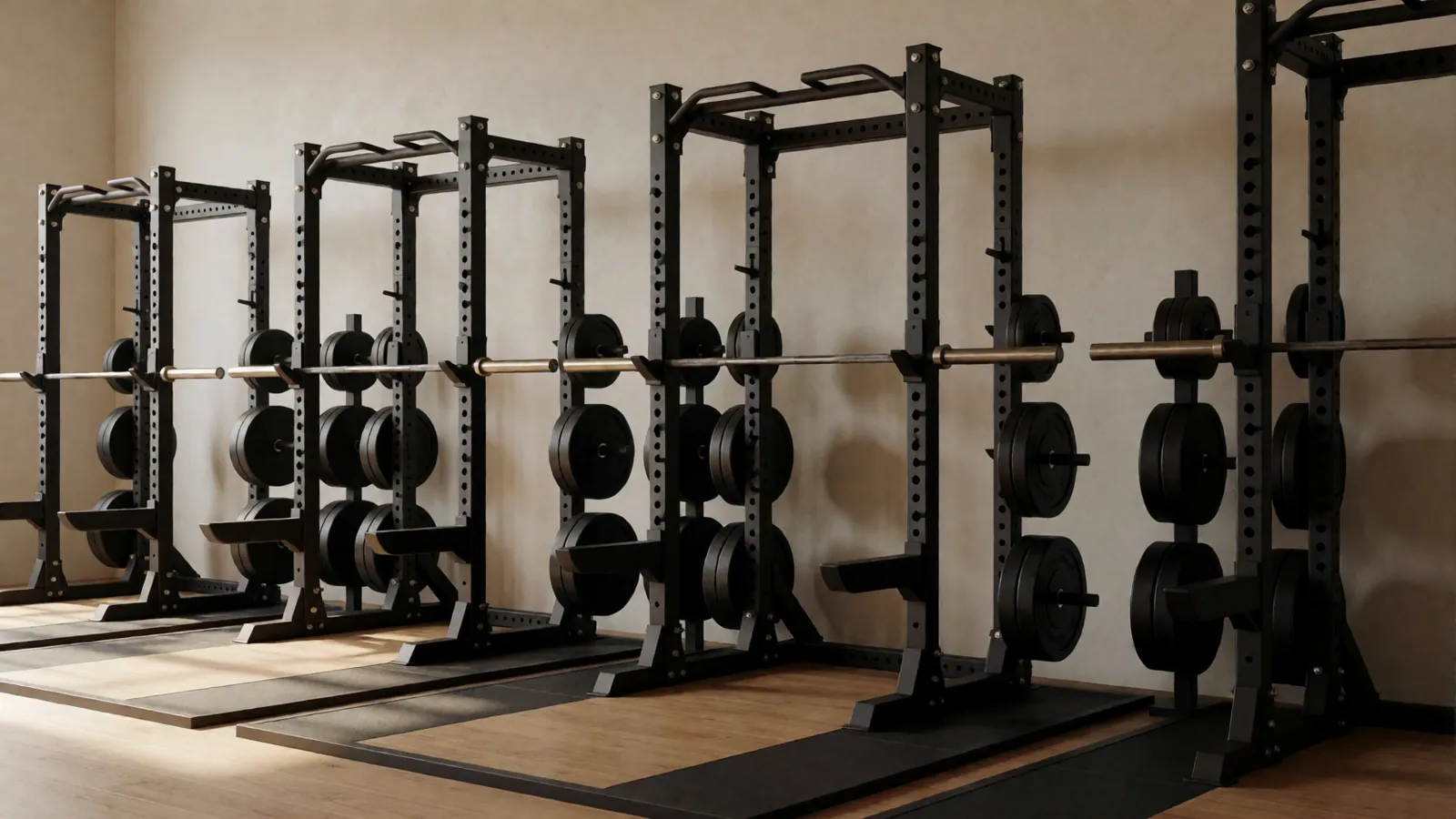
Competition-height power racks on solid oak platforms, spaced so two people can work without negotiating. Two platforms are kept clear of any machine so a deadlift can be put down without an audience.
Calibrated plates and eighteen bars
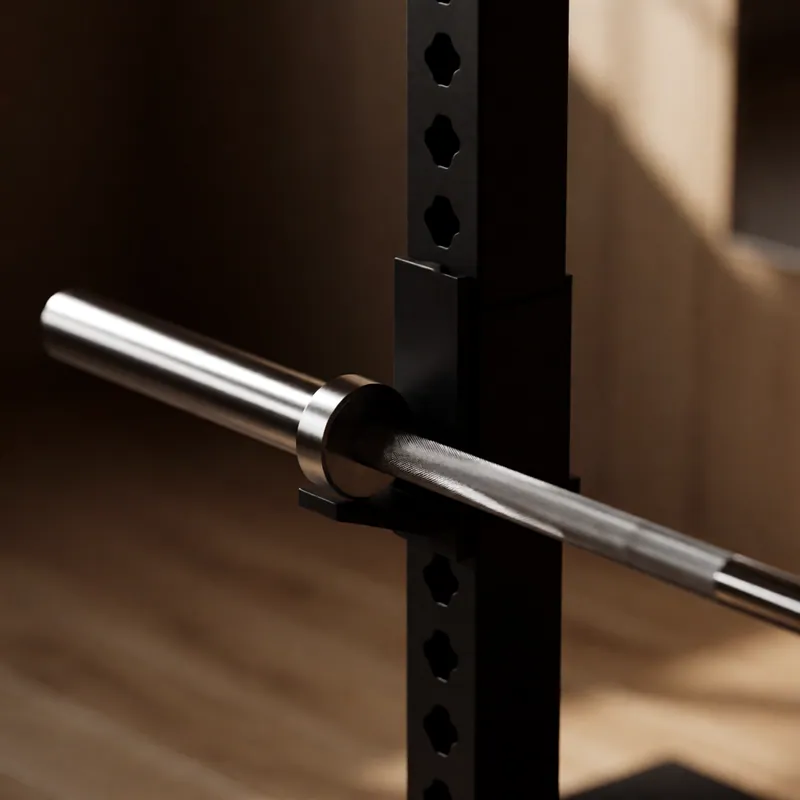
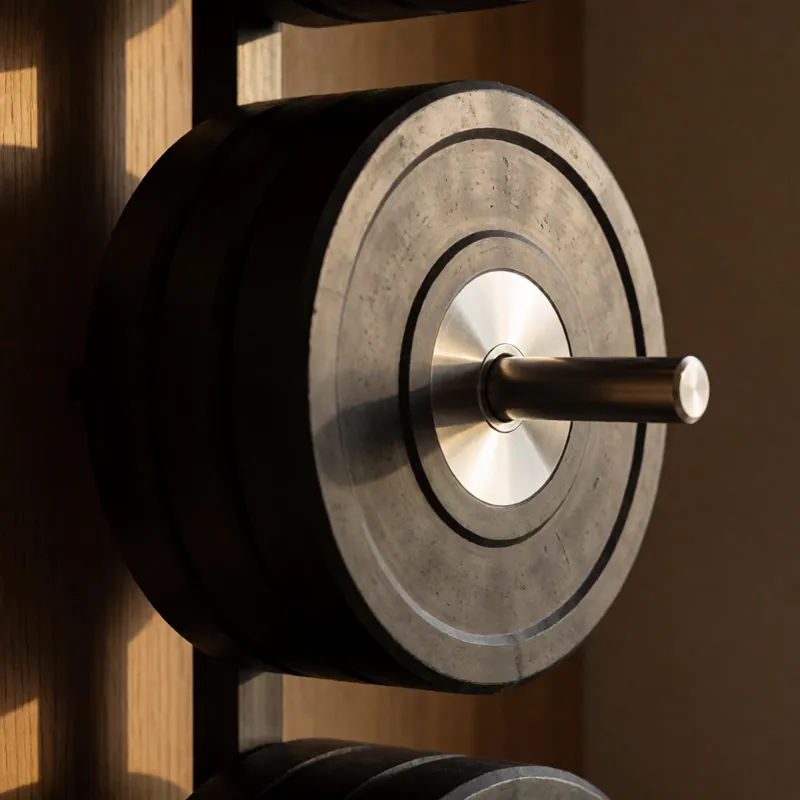
Bars for different jobs — general, deadlift, safety squat, trap bar — because forcing every body into the same bar is how shoulders get sore. Plates you can actually load in small increments.
Dumbbells to 130 lb in 5 lb steps
The top half of that range is what most gyms quietly skip. Small increments matter enormously for anybody progressing pressing work.
Chalk, allowed
There is a chalk bowl on the platforms. It is astonishing how many gyms in this city ban the single cheapest thing that makes a heavy pull safer.
A rule about being shown things
Nobody trains a movement here they have not been shown. Two equipment orientations come with every membership and Open Coaching Hour runs twice a week for anything you missed.
Strength Training in western Queens
Ten platforms, calibrated plates, and a programme where the numbers go up on purpose rather than by accident.
It starts the same way whatever you are here for: ninety minutes with a coach, a movement screen, a handful of baseline numbers, and a written twelve-week programme in your hand at the end of it. The assessment is free, the programme is yours to keep, and there is nothing to sign.
Questions
Strength Training — the questions we are asked most
How often should I strength train?
Two to four sessions a week covers essentially everybody. Two is enough to get genuinely strong if the programme is good; three is the sweet spot for most people; four suits experienced lifters with time. More than four rarely helps and frequently hurts, because strength is built during recovery rather than during training.
Will lifting weights make me bulky?
Building substantial muscle is slow, deliberate and difficult — it takes years of dedicated effort, a great deal of food, and for most people it does not happen accidentally. What strength training reliably does is change your body composition, your bone density and how much of your bodyweight is muscle. Nobody has ever become accidentally huge.
I have never lifted before. Where do I start?
The free ninety-minute assessment, then the Strength Foundations group. Expect the first two or three weeks to be an empty bar and dumbbells, and expect that to feel too easy — that is the design. The people who are still training in year three are almost always the ones who started this slowly.
How long before I see results?
Strength improves in the first two or three weeks, largely from your nervous system learning the movement. Visible changes in body composition take about eight to twelve weeks with consistent training and reasonable food. Anybody promising visible results in three weeks is selling something.
Do I need a spotter?
Not with a properly set rack, which is why we have ten. Set the safety arms at the height where the bar would rest if you failed at the bottom — lower than most people guess — and you can fail a squat or a bench safely alone. Ask a coach once and you will never need to ask again.
Is it safe to lift heavy with a bad back?
Frequently it is the best thing you can do, and that is the opposite of what most people assume. A great many chronic lower-back complaints improve substantially with coached hinging and carrying. What matters is starting light, being coached, and having somebody look at whether your hips actually extend. Bring any imaging or therapy notes to the assessment.
Can I use chalk?
Yes. There is a chalk bowl on the platforms and nobody will tell you off for using it. Sweep it up afterwards.
What if I can only train twice a week?
Then we write a two-day programme, and it will work. Two well-designed sessions a week produce most of the strength gains available to a non-competitive lifter. A three-day programme you complete twice is not the same thing as a two-day programme done properly.
Related
Members usually pair this with
Strength & Performance
Functional Fitness
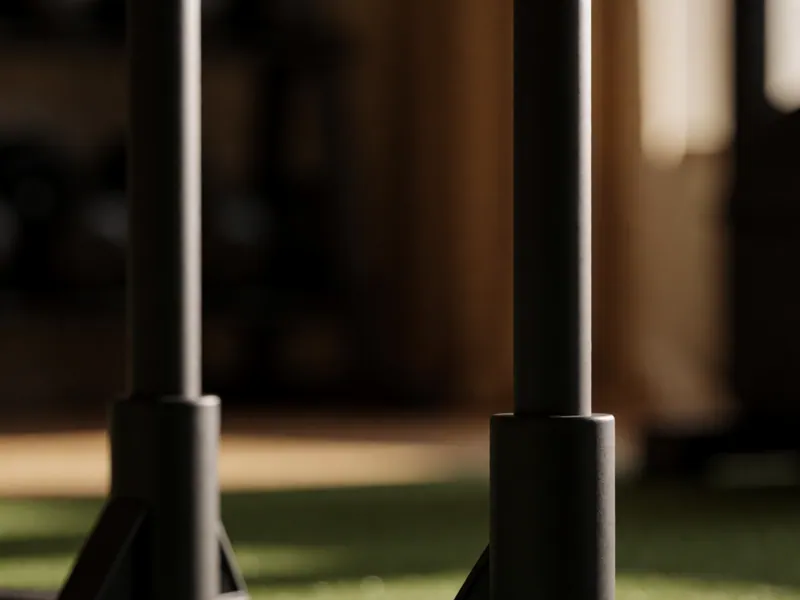
Sleds, carries, rigs and turf — training that transfers directly to the things you do outside this building.
Read more
Strength & Performance
Sports Performance
Speed, power and durability for competitive athletes, periodised around your actual season.
Read more
Strength & Performance
Weight Loss Coaching
Strength training, a nutrition conversation with a registered dietitian, and no meal plan you cannot cook.
Read moreFree assessment, free trial week, no contract
Book a free 90-minute assessment
Ninety minutes with a coach, nothing to sign, and a written twelve-week programme you keep whether or not you join. Every membership is month to month with no initiation fee and no notice period, and the trial week is free.